
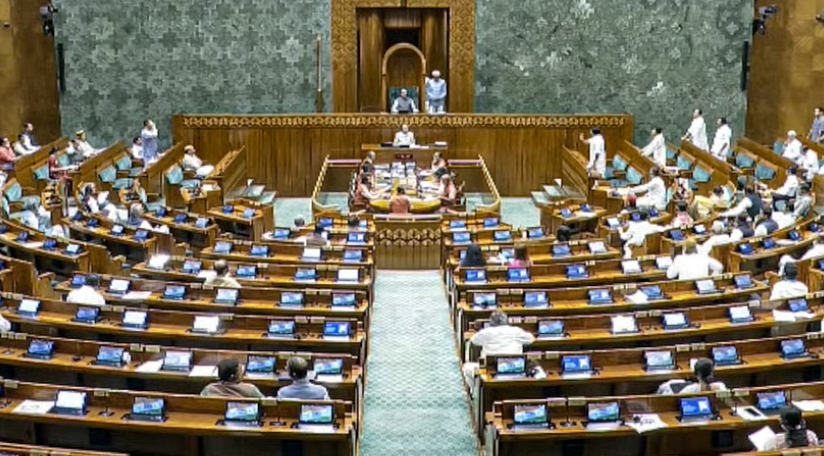
Parliament on Tuesday passed the Registration of Births and Deaths (Amendment) Bill, 2026, after the Rajya Sabha also approved the legislation by voice vote amid persistent Opposition protests, paving the way for stricter legal scrutiny of delayed birth and death registrations to curb fraudulent entries in official records.
The Bill had already been passed by the Lok Sabha on Friday. With its approval in the Upper House, the legislation has now completed the parliamentary process. Soon after the Bill was passed, the Rajya Sabha was adjourned for the day amid continuing protests by Opposition members.
Moving the Bill for consideration and passage, Minister of State for Home Affairs Nityanand Rai said the proposed amendments are aimed at strengthening the credibility of India’s civil registration system while ensuring that genuine applicants continue to receive legal recognition through a more rigorous verification mechanism.South Asians & Diaspora
“The amendments are intended to reinforce the integrity of the registration process without creating hardship for genuine citizens,” Rai said, adding that birth and death certificates form the basis of several legal and administrative processes and therefore require stronger safeguards against misuse.
The legislation amends the Registration of Births and Deaths Act, 1969, with its primary focus on tightening the legal framework governing registrations sought more than two years after the occurrence of a birth or death.
Under the amended law, delayed registrations have been classified into two categories. Applications made between one and two years after the event will continue to require approval from the District Magistrate, Sub-Divisional Magistrate or an Executive Magistrate having jurisdiction over the area where the birth or death occurred.
However, registrations sought after a delay exceeding two years will now require an order from a First-Class Judicial Magistrate instead of an executive authority. The government has argued that transferring this responsibility to the judiciary will ensure greater scrutiny and substantially reduce the possibility of fraudulent or fabricated entries being incorporated into official records.
The amendments also make factual verification mandatory in every delayed registration case. The designated authority will be required to verify the authenticity and correctness of the reported birth or death before granting approval. Applicants seeking delayed registration will also be required to pay a prescribed fee, the amount of which will be notified separately through rules framed under the Act.
According to the Statement of Objects and Reasons accompanying the Bill, birth and death certificates issued under the Act constitute legally admissible proof of the occurrence of a birth or death. The government has maintained that strengthening the verification process will help prevent fraudulent registrations while ensuring that genuine cases continue to receive legal recognition after due scrutiny.
The Centre has further said the amendments are expected to encourage timely registration of births and deaths within the prescribed period of 21 days, thereby improving the completeness, accuracy and reliability of the country’s civil registration system.
Registration of births and deaths remains mandatory under the Registration of Births and Deaths Act, 1969. A birth certificate serves as an individual’s first legal identity document and is essential for school admissions, passport issuance, Aadhaar enrolment, inclusion in electoral rolls, inheritance claims and access to various government welfare schemes. Similarly, a death certificate is required for inheritance proceedings, insurance settlements, pension claims, transfer of property, closure of bank accounts and updating official government records.
The latest amendment comes nearly three years after Parliament enacted major reforms to the law in 2023 to modernise and digitise India’s civil registration system. Those reforms enabled birth certificates to serve as a single document for multiple purposes, including admission to educational institutions, issuance of driving licences, preparation of electoral rolls, appointments to government jobs, marriage registration and maintenance of various government databases.
Despite the extensive reforms introduced in 2023, the government has maintained that the provisions relating to delayed registration required further strengthening to preserve the integrity of official records, prevent misuse and ensure that belated entries undergo enhanced legal scrutiny before becoming part of India’s civil registration database.








Leave a Reply